Features
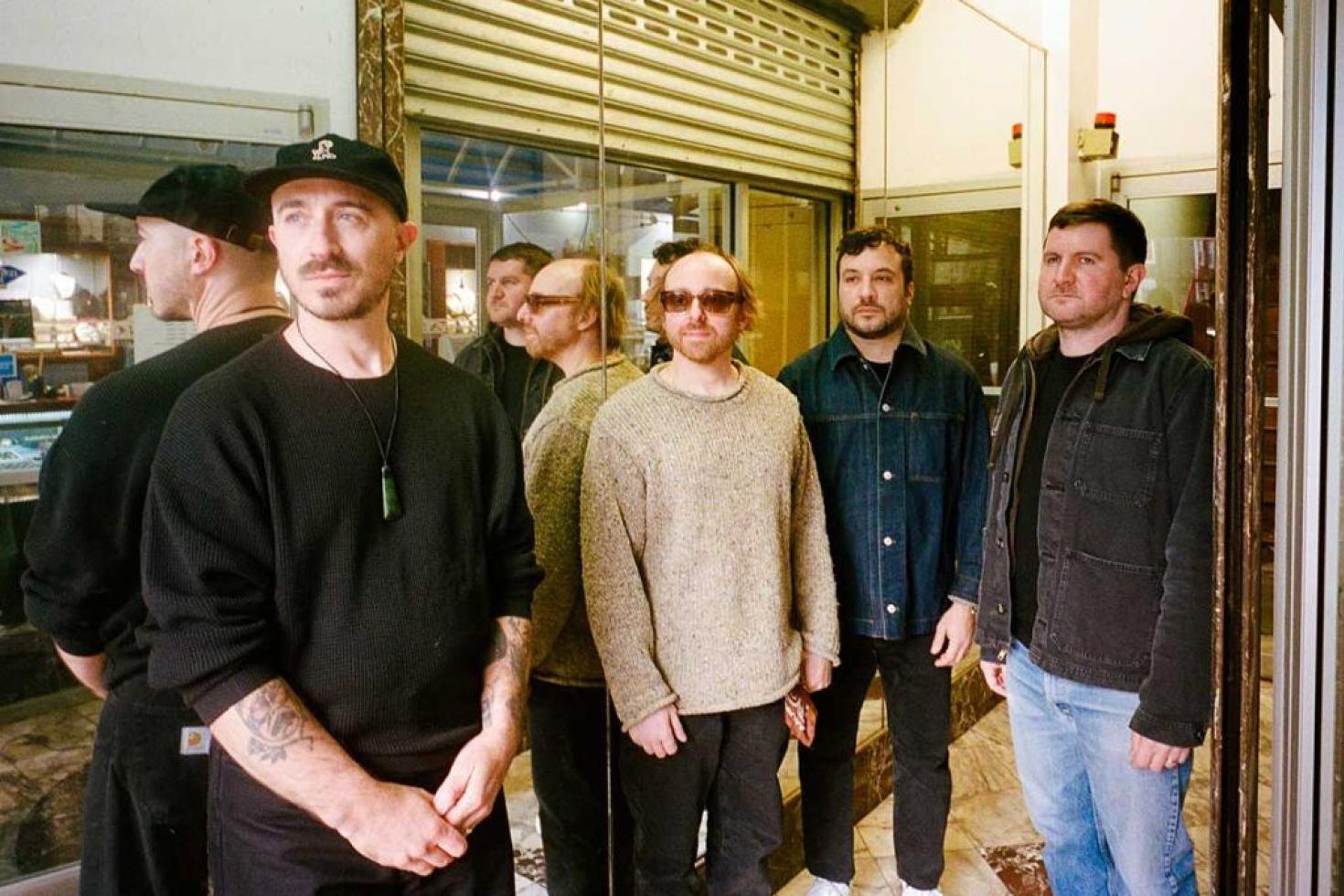


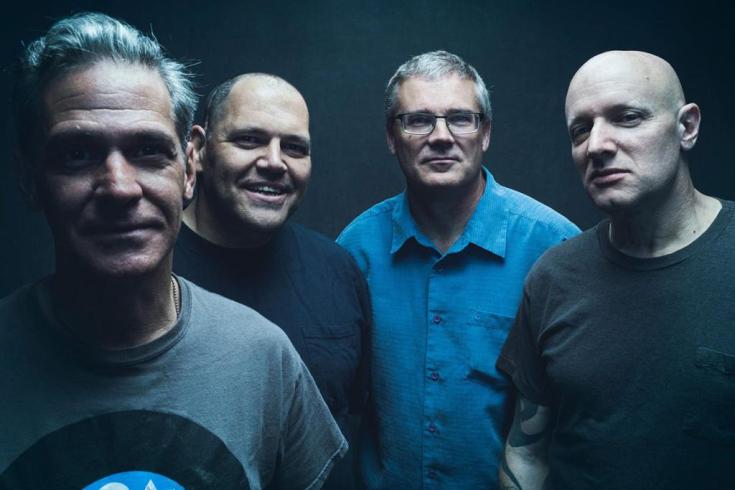
Twenty years in, The Menzingers have reached a point most punk bands never reach. Rather than chasing trends or trying to recapture their youth, the Philadelphia quartet has settled into something arguably more compelling: writing with the perspective that only time, heartbreak and experience can bring.
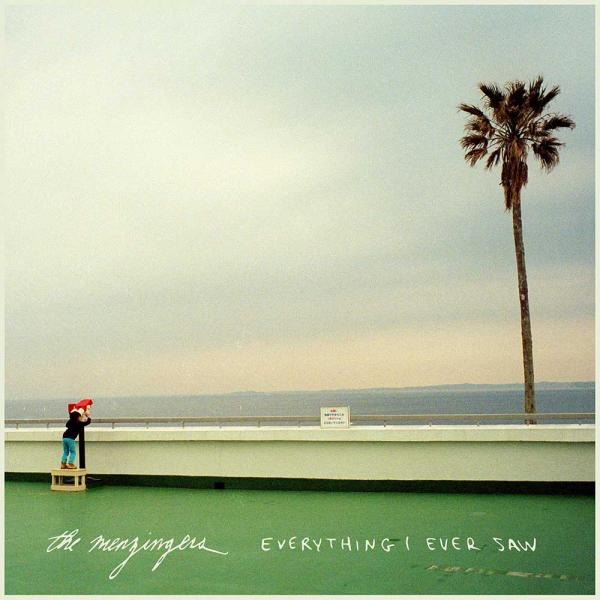
Their upcoming eighth album, Everything I Ever Saw, captures the band at a crossroads. While Greg Barnett celebrated marriage and fatherhood, Tom May navigated divorce and the difficult process of rebuilding his life. Those personal shifts are reflected throughout the record, which balances deeply intimate songwriting with observations on an increasingly fractured world. Musically, it also marks a return to familiar territory, reuniting the band with longtime producer Will Yip and embracing the collaborative spirit that defined their earliest days.
Ahead of the album's release, we caught up with Tom May backstage at Jera On Air to talk about growing older without growing complacent, finding optimism in turbulent times, why the band returned to Will Yip, and how two decades together have only strengthened the bond between the four members of The Menzingers.
PRT: You've been releasing new albums every two or three years. Is that timeline something that happens naturally for the band, or is it dictated by the industry?
Tom: It's definitely an industry norm for a band like ours because we don't really make money from albums. To sustain a career, we have to tour. The traditional format has always been to put out an album, play everywhere you can a couple of times, and then go back and do it again.
For us, it has worked out really well and happened naturally because we haven't had issues where we had to take off a lot of time. Thankfully, we've all been very healthy, we've remained friends, and we're the same people. Additionally, the amount of life experience you want to take in before writing about life takes about two or three years to get a handle on. That schedule just works well for us.
PRT: After almost 20 years as a band, does releasing a new album feel different than it did in the beginning?
Tom: It does, in two ways. First, we like what we're doing now more than what we were doing then. Second, when we were releasing our first records, we didn't know anything about the music industry. We didn't know how big our band would get or if it would even work. Because of that, it felt higher stakes and a bit more mystical. Now, we know exactly what we're getting into. We know how to avoid making the same mistakes - even though we still do sometimes - and we feel like we can express ourselves much more clearly.
PRT: Are you happy with how big you've gotten, or is there still some ambition rumbling after 20 years to get even bigger?
Tom: That's a funny thing about the music industry: what exactly is the top? Technically, you can keep trying to become the biggest band in the world, but I am so happy where we are. I can speak for the four of us: we're all extremely happy. If we didn't get any bigger, that'd be totally fine. We get to make a living, we’ve made a life out of doing this, and we have the best fans in the world to grow with. There's nothing more we could possibly ask for.
PRT: For your last album, you went with Brad Cook as a producer, but this time you went back to Will Yip. Why the switch?
Tom: Working with Brad was absolutely incredible. We went down to Texas and recorded on the border of Mexico at a place called Sonic Ranch, which felt almost like a religious experience.
This time around, Will was opening an amazing new studio in South Philly. In my opinion, it's the best studio in Philadelphia, and all four of us live in that exact neighborhood. Around that time, we found out Greg and Sarah were going to have a baby, Greg had just gotten married, and I was going through the end of a relationship and a divorce. Having been a band for 20 years, we were looking back and looking forward. We wanted to keep it a close-knit family situation and make the record with one of our best friends whom we’ve known for years. Plus, we just love working with Will. He's the best. And we literally got to walk to the studio every day.
PRT: How cool is it to see a friend of yours make it this big as a producer?
Tom: Unbelievably cool. We've known him for so goddamn long, and he is someone who is completely on the same wavelength as us. It has been absolutely awesome to see him bring in all this success. He's also the single hardest-working person I've ever worked with—and I don't mean that as hyperbole. That is 100% true, so nobody deserves it more than him.
PRT: Is it different going all the way to Texas away from your daily life to record an album versus staying at home?
Tom: Yeah, totally. There's a romantic notion of being away from home, and that can show up as a character on the record, which it did for our previous one. At home, if you're not careful, you can get distracted by daily life. But we have our lives set up in a way where we didn't. We had our family with us, and our manager Tim, who has been with us for something like 15 years, lives there too. We felt supported rather than distracted.
PRT: On the new album, you reference Leonard Cohen, The Truman Show and even Abraham Lincoln's First Inaugural Address. When you watch a movie or read a book, does it immediately inspire a song, or does it just pop up later when you're writing?
Tom: It's something Greg does that I have started to copy, which is keeping a living document like a note on your phone or a journal. You write down memorable lines you come up with or inspiring pieces of media you see, collect them all, and refer back to them as you work. There have been a couple of times where something I heard inspired a full song right away, but most of the time songs are built from collections of ideas over time.
PRT: What defines an inspiring line for you?
Tom: Mostly it's an emotion that I feel deeply. Personally, I'm always chasing after lines, pieces of art, or movies that make me think about the world differently and challenge my worldview or expectations.
PRT: What's the line you're most proud of?
Tom: They change over the years, so I don't have one on the tip of my tongue. On the newest record, my favorite line is in a song we released called "Better Angels":
"I know heaven ain't a place that you could go."
To me, that sums up the message of human relation we're trying to convey on the record. It's a level of optimism about how no one is coming to save us, and that we have to build heaven here on earth ourselves without relying on anyone else.
PRT: Is it hard to stay optimistic looking at the state of the world right now?
Tom: Yes and no. It's especially hard to be optimistic when you come from a punk band, because all we've done is bitch and moan about things for 20 years. But when you zoom out a little bit, you realize that while things are bad right now, they've been a lot worse very recently. America had an actual Civil War where a measurable percentage of the country died from dysentery and things like that.
A lot of it comes down to the media we consume. They are economically incentivized to get our emotions riled up and to keep us fearful, which makes the world seem worse than it is. The divisions are insane, so it is hard. But then I see my neighbors and know things aren’t so bad. Now that I'm almost 40 and we've been a band for 20 years, I've seen people change and I've seen what actually connects us. That makes me optimistic that we can come together.
PRT: I've never seen The Menzingers as an explicitly political band, but you do have songs like "Other People's Money" on the new album or ‘America (You’re Freaking Me Out)’. Does frustration have to reach a certain level for you to write a song about it?
Tom: We've actually had political songs on every single record, starting with our very first one. As a teenager, I protested the invasion of Iraq, and we were around for Occupy Wall Street. I remember a particular time when Greg and I went to the protest at City Hall in Philadelphia, which partially inspired our song "Nice Things" . It's just not the primary focus of our songwriting, but we've always been involved in our personal lives.
PRT: When you write songs that are more based in your personal lives, like navigating a divorce on the new album, is there ever a point where you feel you're giving away too much?
Tom: I was nervous about being so personal on this record, and we actually had a band discussion about how we were going to talk about it. A lot of the times when we write stories, they aren't strictly a single real story; they're a combination of things we or our friends have lived through.
We don't really put our personal lives onto social media, so the question was whether I wanted to talk openly about it in interviews. In the end, I thought, "This is real life, and other people listening to our music are going to go through it. It's going to be helpful and relatable to them." Plus, being a band for 20 years makes you stop caring so much about hiding it. You just think, "Whatever, I'll talk about it."
PRT: That seems to be what The Menzingers have always been about: real-life stories.
Tom: You're totally right. We didn't really talk about it explicitly until the last couple of albums when we looked at what we were actually writing, and realized we've been writing about ourselves the whole time. It makes it relatable.
My dad always used to say, "Bigger kids, bigger problems." I used to think he meant getting into fistfights as a teenager or crashing a car versus a bicycle. But in reality, it carries on into your 30s. That's when health issues start to happen to your peers and families, the older generation starts to pass away, and you navigate divorces, kids, and career changes.
PRT: Music feels different from other art forms in that sense. When writing a book, you can hide behind characters, and poetry can be vague and open to interpretation. Are you conscious of that vulnerability when writing lyrics?
Tom: I am absolutely conscious of it because lyrics are intrinsically tied to a performance and vocal delivery. Singing the lyrics and how you deliver them is so much more of the battle than just writing them down. Over the years, I've listened to some of my favorite songs that convey enormous emotion or resonate deeply with me, only to look up the lyrics and realize they are total nonsense.
A good example is the song "Loser" by Beck. It always resonated with me in a deep, chill way about the monotony of existing and getting caught in weird thoughts. Then I watched a YouTube video of him talking about the production, looked at the lyrics, and realized it's just a weird dude trying to mimic rapping. The lyrics are bizarre, but it completely works because of the choice of words and the delivery.
PRT: Are there songs you wrote years ago that have taken on a different meaning for you now?
Tom: I don't think they've taken on a completely different meaning, but my perception of the meaning has changed as I've gotten older. We have a song called "Burn After Writing" that was written about a very particular place I was in regarding a relationship. I've changed so much as a person since then, and so has the person I was writing about. Singing it now feels a bit deeper and bittersweet. You realize that with the loss of love, you do eventually get over the frustration and heartache, or you just get used to living with it.
PRT: In the biography that came out with the new album, Tom states, "We've been doing this for so long that it's routine." How do you make sure routine doesn't become complacency?
Tom: Luckily for us, we don't have to try very hard because we love doing this so much. Complacency becomes dangerous when you start building resentments. There are times on tour when you're incredibly hungover, stuck at an airport, and your flight is delayed. In those moments, you have to take a step back and remind yourself, "Well, I'm on my way to Europe to play festivals, and I'm doing it for a living." If I had to narrow it down, maintaining gratitude and curiosity will stop anything from turning into complacency.
PRT: You've outlasted a lot of bands that started around the same time as you. Looking back, what do you think you did right that others didn't?
Tom: Early on in a career, it's simple things like showing up on time. I know so many brilliant musicians who couldn't get to a show on time. Being on the same page with each other is incredibly important.
But these days, I look back and realize we've just been incredibly lucky. We moved to Philadelphia right at the start of the global recession, and the music scene there just exploded. Everyone was forced into houses and had to live and play together. We also haven't experienced a tragedy that forced us to stop the band.
The rest of it comes down to liking each other, not being an asshole too much, and staying on the same page. It's surprising how many groups of people—whether they are making music, running a roofing company, or navigating a family—don't actually talk to each other about their goals and emotions. We've been able to do that over the years, and it has allowed us to weather many storms.

Lacking the talent to actually play in a band, Tom decided he would write about bands instead. Turns out his writing skills are mediocre at best as well.