Features


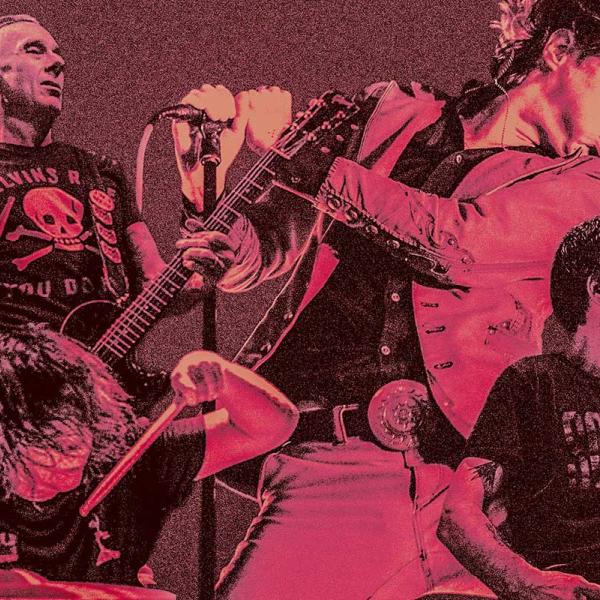
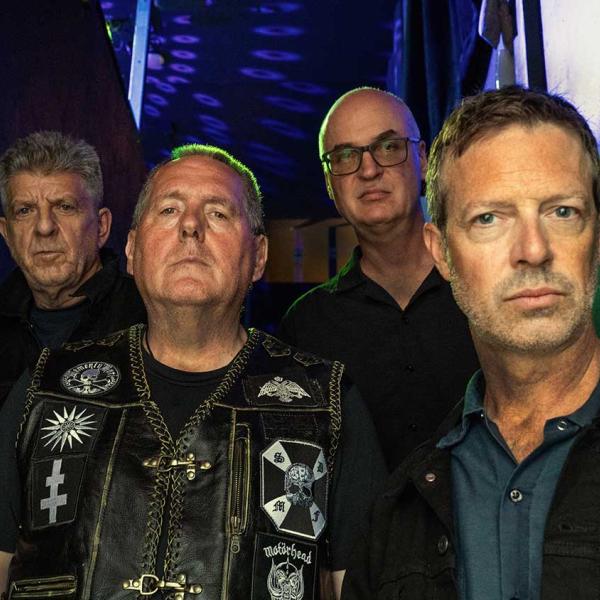
After 15 years of silence, Chicago punk lifers The Arrivals are back. Louder, sharper, and seemingly untouched by time. This April sees the release of Payload via Recess Records, a long-awaited follow-up that reconnects the band with their roots while pushing into new territory. Tracked at the legendary Electrical Audio with Joe Gac behind the board, the record captures a band rediscovering its chemistry in real time.
Guitarist/vocalist Little Dave Merriman describes the experience of reconvening after years apart as something close to magic. It's a sentiment that speaks to the enduring bond between members, even across long stretches of distance and life changes. Payload doesn’t just mark a return; it reflects who The Arrivals are now, without losing sight of what made them essential in the first place.
We caught up with vocalist/guitarist Isaac Thotz, guitarist/vocalist Dave Merriman, and drummer Ronnie DiCola to talk about the making of Payload, and how a band separated by miles and years can still sound 100% like themselves the moment they plug in together.
Payload will be out April 17 via Recess Records (pre-order).
PRT: It’s been about 16 years since the last Arrivals record. What led to that long gap?
Isaac: Well, we’ve all been up to all sorts of things during that time, including making music with other bands. Personally, I’ve made eight albums with three different bands as well as two album-length music films. I also opened a punk music venue in San Pedro, CA with Todd from Recess Records, the Sardine.
Ronnie: We’ve never wanted anything to feel forced with the Arrivals and to let things happen organically. I’ve been doing studio work as a session drummer and currently drumming for Local H, Heavy Seas, and You Died. I also work full-time in HVAC, plumbing, and engineering.
Dave: As criminally uncool as this is, I was offered a job in 2011 that made touring more difficult for me and I think that did a lot to halt our momentum. It was one of the hardest decisions I ever had to make. But just like everyone else, I also made a bunch of other music throughout those years: we put out a 7” and played a grip of one-off shows; I joined a band I loved; started another; played in Treasure Fleet with Isaac for a couple years; made a solo record and played a lot of shows. There was never an end in sight, we just aren’t limited by tunnel vision.
PRT: Was there a specific moment or conversation where you decided, “Okay, we’re making a new record”?
Isaac: For me, I remember hanging out with the guys and just being like, “we’ve been playing together for so long, I think at this point if we can just find the time to get in a studio together, we’ll know how to make a great record.” And really that’s how it went. We had a one day studio session at Million Yen in Chicago where we recorded demos of all the songs. That was a little over a year before we went into Electrical Audio. We each learned the songs from the demo. And then right before recording we took one day of rehearsal together with the four of us, and then the next three days of recording all in a row at Electrical. Those three days are like 90% of the recording. I don’t think many bands make records like that anymore. I feel like it’s special and we’re kind of lucky to get to do it that way. We were forced to trust ourselves and our instincts and judgments in the moment. You don’t have much time to make mistakes, or to reconsider your decisions. I love that it happened like that. But yeah, it was that conversation, where we said we know who we are and we’re good at what we do together so let’s not make this more complicated than it needs to be. That helped us take the first step.
Ronnie: I was 100% on board when Issac said let's get some dates on the books, go in and press record.
Dave: As soon as they were down, I was down!
PRT: After such a long break in between albums, did you feel any added expectations - from yourselves or from others - going into this album?
Isaac: Nope. I try not to worry about expectations.
Ronnie: Agreed. I wanted to bring as much as I could to this record without being too busy, keeping the drums exciting and tasteful while always playing for the song first.
Dave: We’ve just always done exactly what we want to do and hope that people want to join us.
PRT: Did most of the songs on Payload come together once you committed to recording, or had some of them been around in some form for years?
Isaac: All the songs that I wrote for the record had been around for years. The first part of the last song on the record “The Wretched of the Earth”, that’s a song Ronnie and I demoed right after Volatile Molotov. So the music for that one is about 15 years old. Then I wrote songs for four albums with Treasure Fleet and one album for another band I did, Nos Da, and so some of the songs that ended up on Payload started demos for those projects that didn’t work out in the other bands.
Ronnie: The day we went into record demos at Million Yen, I brought the music for the song “Shake” so Dave and Isaac could help shape the structure of the song. Isaac later improvised the lyrics at Electrical Audio during the recording session.
Dave: I was sitting on a few when we got together. I write songs without a game plan and some of them just end up sounding like an “Arrivals” song to me, whatever that means. I kept them in my back pocket, hibernating until needed!
PRT: When writing new songs, do you still work the same way as when you first started out? Or has the process changed?
Isaac: The process is pretty much the same. Someone comes up with the original chord progression or riff and vocal melody. Then everyone in the band generally writes their own part. And then almost always whoever had the original music idea writes the lyrics. That’s sort of the way the Arrivals have been doing things from the beginning.
Ronnie: I agree with Isaac. There have been a few songs that came out of us just jamming and really came together organically at rehearsal—especially back in the day when we were all in the same city and practicing more often. It’s always been a very collaborative process.
PRT: Your lyrics often deal with the lives of working-class Americans and a general disillusionment with civilization. With there being plenty to be disillusioned about at the moment, where do you even start when writing lyrics? Do you generally write about personal experiences?
Isaac: The lyrics to a couple songs I wrote on this record are overtly personal. And yes, of course, I always draw on my personal experiences when I’m writing lyrics. But it’s usually a movie or show I’ve watched or book or article I’ve read that sparks the idea for a song. Otherwise it's often the story of a friend or family member or someone I’ve met. And then once I have a direction I don’t mind doing research for a song, as if I’m writing a novel. I like writing songs that are stories, and I always want the details to make the story as real as possible. Even if it’s meant to be satirical, I want the details to be there. Then how I finish it, it’s all about: what I want to say and how much do I need this thing to rhyme.
Dave: I’m a working-class American who is acutely disillusioned with civilization, so it’s all personal. But, coming back to “where do you even start?,” it is hard sometimes to narrow the point-of-view. The disillusionment and desire for unity, equity and progress is always there, but the particular story and subject usually comes into focus for me as the song is forming. I’ll freestyle lyrics, throwing lines at the wall to see what sticks, and a particular line will become the anchor for what the song becomes.
PRT: With all that is going on in the US, does punk rock have its work cut out more than ever?
Isaac: I think so. I don’t want to speak for all of punk rock. But it seems to me punk was born out of individualism and non-conformity, and those were certainly ideals that attracted me to it. But also, it’s a community that values those ideals. There are a lot of communities both in this country and around the world that are based on subjugation and conformity. That could be subjugation to a nation or a party or a religion or a tribe or an identity. We live in a time where the pendulum in America, as well as all over the world, is swinging toward consolidation of power for tribal, conformist communities over communities that value individualism, pluralism, and diversity. So if the punk rock community is going to buck that trend, yes, it definitely has got its work cut out.
Dave: Punk rock has its work cut out for it just defining itself. Not that it’s necessary, and any real punk doesn’t care, but there are a lot of people who think being “punk rock” is essentially just being a contrarian prick. Or being like a perpetual D student who could claim being a nihilist if they could define it. And there’s a lot of very un-punk music that gets dressed up as such — muddying the waters. I say if your punk rock band throws a punch it better be up, at the ruling class, and it better be hard. Riding the fence is for radio rock.
That said, I hope people hear our songs and are inspired to be the change they want to see, or at least we leave them more skeptical of power and greed. That’s what punk rock did for me, particularly the DIY element, and we’re all certainly going to need to be doing a lot more ourselves from now on.
PRT: Musically, Payload - like your previous releases - shows a lot of different influences, but all of the songs always sound like The Arrivals. Is there something - musically or instinctively - that “Arrival-izes” a song?
Isaac: I think each of the four of us has sort of our own idiosyncratic, distinctive style, and when you put those together, that’s the Arrivals. Ronnie is just a special drummer. That’s so obvious to anyone who’s ever seen the Arrivals, I don’t think I have to say any more than that. Paddy has his style. He has his go-to licks, his walk ups, playing more than one string at a time. His own musical palate. I hear it in D4 and I hear it when we’re writing a song for the Arrivals, and I hear it in most bands he plays with. Lil Dave obviously has a very distinctive song writing style and voice. But also his guitar playing, whether it’s his very specific melodic guitar solos or his arpeggios, I can always pick out a Lil Dave part. I think I have my own thing I do too, especially in song writing style. So I think it’s like we each have a go to palate, that all works together and that makes the Arrivals sound.
Dave: Isaac has a Keith Richards-ish swing to his strumming and a signature rhythm. Not like ONE rhythm, but I can hear an Isaac boogie from two rooms away. And nobody writes lyrics like him. I’ve cried reading his lyrics for the first time. Just wanna give you your props too, brother! To reiterate his point, The Arrivals arrivalize a song.
PRT: When you listen to Payload, is there one song or lyric that jumps out for you personally?
Isaac: Hmm. Nothing comes to mind. I like different songs and lyrics for different reasons all the way through.
Dave: “You might see warfare, but opportunity is the pregnant mother of need,” from The Wretched of the Earth clobbered me the first time I heard it.
PRT: You recorded with Joe Gac at Electrical Audio. Why was he the right fit for this record, and what did he bring to the sessions?
Isaac: We love the way Joe’s records sound and plus Joe is the nicest guy and super easy to work with. He’s a fiend. We’ve known him from Meat Wave, and even way before then. I can’t remember a recording session where there wasn’t some engineering technical problem that killed the energy, but there was none of that with Joe, so yeah just utmost competence. We did come in on day 2 of 3 and an intern had reset the board, but even then Joe rolled with it and got us back on track without any major disruption. Joe suggested Electrical Audio. There are the practical things, great sounding room, great gear, in Chicago, and of course Albini and the records that had been made there. Easy choice.
PRT: After 15 years away from recording, what does being in The Arrivals mean to you now?
Isaac: Every time we get to do anything Arrivals, I just feel a great deal of gratitude to still be able to be doing it.
Ronnie: Totally agree with Issac, just happy that we’re all still around to do this.
Dave: Isaac, Ronnie and I have been Arrivals for 30 years and friends for even longer. We’ve been friends with Paddy for most of those years and he’s been in the band over 20 years now. It’s family.
PRT: Chicago has a pretty distinct punk identity. Does the city still shape The Arrivals?
Ronnie: Yes, definitely. But I also think that Minneapolis and Los Angeles do as well. We're bringing a little taste of each of those cities together in the band.
Dave: I think Chicago has a more distinct punk identity from the outside looking in. There are multiple punk rock scenes in the greater metropolitan area, dozens maybe. Not just sub-genre-related either; there are like five different hardcore scenes. I’m guessing, but I don’t think I’m exaggerating too much. But, to your point, that variety of Chicago flavors has always shaped us. You have to be good to stand out amongst so many dope, fucking bands. It certainly still shapes us because a lot of our local contemporaries are still going! And there seems to be a new band every few months that flips my wig. I’m excited for the future of Chicago punk rock. All of it!
PRT: What’s up next for The Arrivals once Payload is out?
Ronnie: Trying to book some shows, would love to play this record and our catalog live.

Lacking the talent to actually play in a band, Tom decided he would write about bands instead. Turns out his writing skills are mediocre at best as well.