


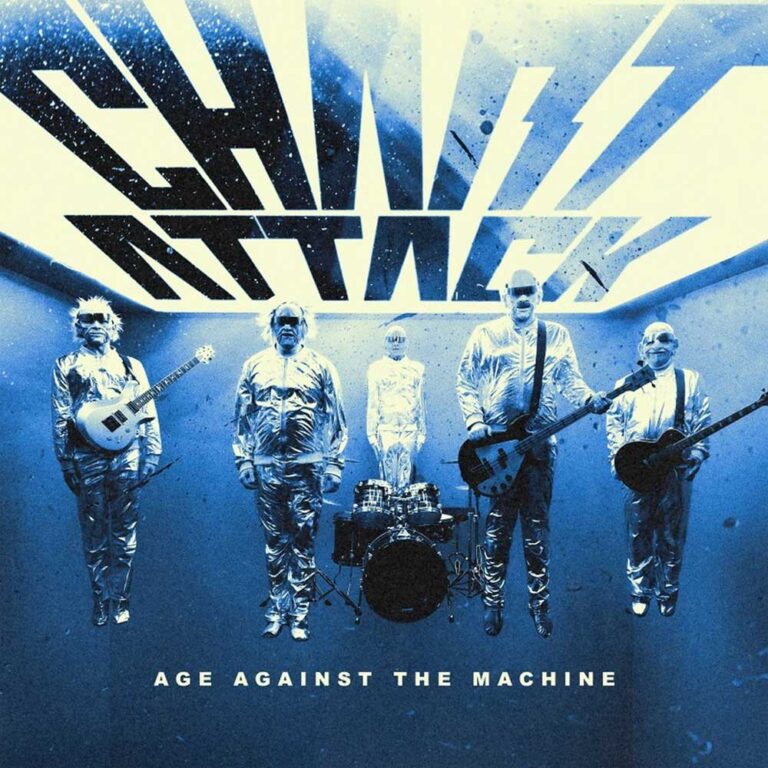
Chart Attack prove you can age gracefully on “Age Against The Machine”
We caught up with vocalist Burt from Chart Attack to talk about the band’s debut album, Age Against The Machine.
Released just last week on October 30th, the 13-track record is a high-octane ode to ’90s music. Chart Attack has taken eleven of the decade’s biggest hits and completely rebuilt them from the ground up as fast-paced, pop-punk party anthems. And if you’re wondering if they can make Metallica’s “Enter Sandman”, Nirvana’s “Smells Like Teen Spirit” or Soundgarden’s “Black Hole Sun” interesting again, they can. And they did.
Backed by heavyweight guest vocalists like Jason Aalon Butler (Letlive., Fever333), Kevin Martin (Candlebox), and Jaret Reddick (Bowling For Soup) and mixed by producer Jason Livermore at the iconic Blasting Room, the album is a massive nostalgia trip with a modern, heavy-hitting bite.
PRT: Age Against the Machine is out now. Aside from the requirement that every song had to be from the ’90s, what criteria did a track need to meet for you to be able to put your own spin on it?
Burt: The rule in Chart Attack is that we play people’s number one song. We’re old. We don’t have time to stand there while somebody explains why track eight on an obscure Japanese import is actually their best work. Give us the big one. The one where the first few notes hit and everybody in the room knows what’s coming.
Then we have to figure out whether we can do something with it that makes it feel like Chart Attack. Loving a song doesn’t automatically mean we can make our version work. There were so many artists and songs from the ’90s we wanted to pay homage to, and narrowing it down was tough.
We’d love to get to all of them, but time is running out. That’s not a marketing strategy. That’s a medical concern.
PRT: How come no one thought to include one of Creed’s hits?
Burt: We actually shot our Creed wad pretty early. We covered “Higher” on our EP Something Old, Something Nü, back when we first decided to start putting out records. So we have already accepted Creed into our hearts.
We cut out all the nonsense, and our version ended up being relatively short. Turns out you can get a lot higher a lot faster when you’ve got somewhere to be. At our age, you can’t spend all afternoon standing on a mountaintop with your arms out. Somebody’s got a prescription to pick up.
PRT: You have guests on the album in the form of letlive./Fever333’s Jason Aalon Butler, Candlebox’s Kevin Martin and Bowling for Soup’s Jaret Reddick. How did those collaborations come about and what made them perfect for those songs?
Burt: We put together a list of artists we thought would never in a million years collaborate with Chart Attack. It went from Corpsegrinder of Cannibal Corpse all the way to John Feldmann of Goldfinger. The list had absolutely no business existing, which is usually a good sign for us.
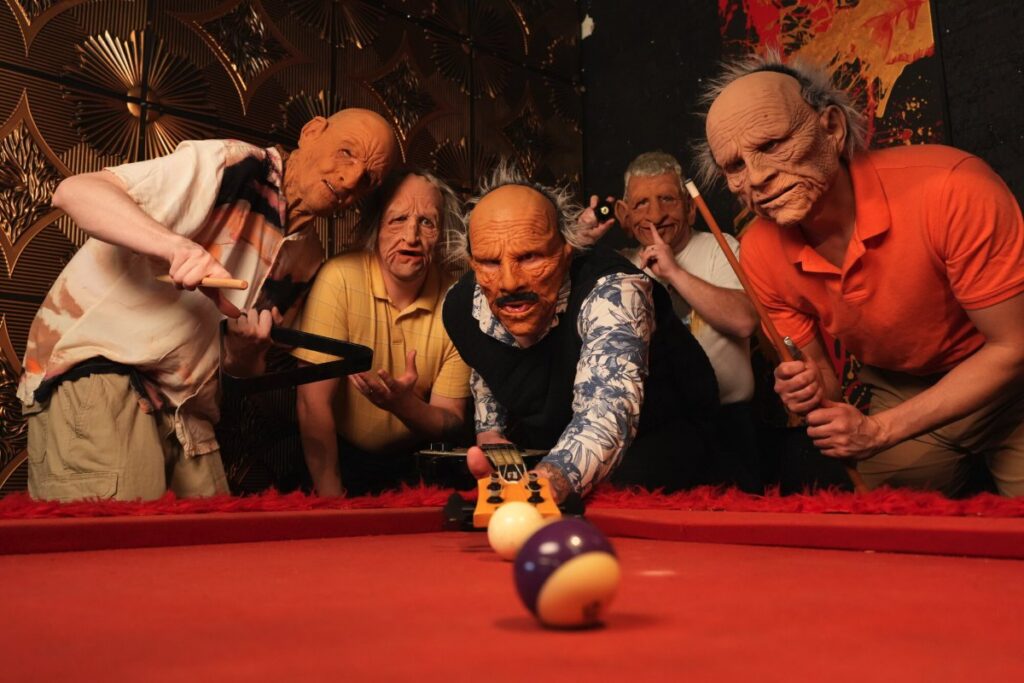
Then we started sending DMs, introducing ourselves and asking. Most people ignored us or said no. Fair enough. If five elderly men in masks show up in your inbox asking you to make a record, you’re entitled to have questions.
But Kevin Martin and Jason Butler were excited about the chance to do something different. These guys have such distinctive voices and personalities, and we wanted to give them room to bring that to songs they wouldn’t necessarily do with their own bands. Kevin on “Man in the Box” and Jason in the reggae section of “Killing in the Name” gave us moments we never could have created by ourselves.
With Kevin, it went from a DM to us meeting him in Springfield, Illinois, while he was on tour. He told us to bring a microphone, so we rented an Airbnb, picked him up from his tour bus around noon, and brought him over to record. There’s something wonderfully ridiculous about going from listening to Candlebox to making sure Kevin Martin has the address of your rental property.
We also DM’d Jaret, who is a very collaborative guy. Almost suspiciously collaborative. We actually pitched him a different song, but he chose “No Rain” because he said it was one of his favorite songs ever. When somebody is that excited about a song, you get out of the way. His voice sounds fantastic on it.
We still can’t quite believe any of them answered the messages, let alone agreed to be on the album. Underneath all the nonsense, we’re massive music fans. Getting to make something with people we admire means a lot to us.
PRT: You recorded all of the tracks yourselves. Is that simply the most comfortable way of getting things done with all of you having jobs and families?
Burt: Everyone kept telling us you don’t have to go to a recording studio anymore. Then we looked up studio prices and, being on a fixed income, decided those people were absolutely right.
We found one of those little red Focusrite interfaces everyone makes fun of, and boy, did it do the trick. Apparently you can make a record with one. You do still have to learn how to use it, which was an unfortunate discovery.
The biggest benefit was having time to figure things out. We weren’t paying by the hour while trying to decide whether a Metallica song needed something stupid happening in the middle. We could experiment, walk away, come back, and give everybody room to contribute around jobs and families.
Everybody could deliver their greatness at their leisure. And sometimes greatness has to wait until after you’ve taken the bins out.
PRT: When I first looked at the tracklist, my thought was, “How are they going to make these tracks interesting again when everyone has heard them a million times?” Yet you managed to give them all a distinct spin. How challenging was it to reinvent these songs?
Burt: It’s pretty challenging to take something like “Enter Sandman,” which is already a rock song, and announce, “We’ve had an idea. What if this rocked?” Metallica did get there before us. We have to acknowledge their early work in that area.
So the challenge is finding something beyond just playing it faster. Sometimes a change in feel opens the whole song up. Sometimes we default to reggae. With “Killing in the Name,” we basically said, “Fuck it, get the clinky guitars going,” and suddenly there was somewhere interesting to take it.
Every song has its own problems to solve, and you have no idea how many we try that end up on the cutting room floor. You can love the original, love the idea, and still get halfway through playing it and realize you’ve made something nobody needs to hear.
The versions that survive have to feel like us. People should recognize the song, but there should also be a reason to listen to our version. That’s why we call ourselves an original cover band. We’re aware that sounds like something you’d say after a minor head injury, but we stand by it.
PRT: Was there one ’90s hit you really wanted to include, but just couldn’t get to work as a punk rock track?
Burt: Absolutely. We wanted to pay tribute to a legendary artist by the name of Sir Mix-a-Lot with his timeless classic, “Baby Got Back.”
The problem is that when you speed up a rap song to punk rock tempo, somebody still has to say all the words. The instruments are having a wonderful time. The singer is experiencing a medical emergency.
There’s a limit to how much lyrical information you can get out of an elderly man before he needs to sit down. Sir Mix-a-Lot did not leave a lot of room in there for us to catch our breath.
But we haven’t abandoned it. We’ll figure out a way to get it out. Some bands spend years chasing their masterpiece. Apparently ours involves big butts.
PRT: If you flipped the concept on its head, which ’90s punk rock song would make a great cover in an alt-rock/grunge version?
Burt: That is such a fun question. My first picks would be “May 16” by Lagwagon or “Stamp” by Hagfish. And then I immediately want to add pretty much anything by No Use for a Name.
Those would be the first songs I’d want to mess around with and see what happens when you slow them down and give them that heavier treatment. Of course, saying that out loud is dangerous, because now I want to hear it.
You asked for one song, and I’ve started another album. This is why nobody should ask us questions without a responsible adult present.
PRT: You’ve mentioned in the past that when your Slipknot cover went viral, you weren’t fully prepared for it. How much scrambling went on behind the scenes to keep that momentum going without losing the fun of the band?
Burt: We’d played two shows when our singer blew out his voice, developed a vocal nodule, and couldn’t sing or talk for about six weeks. During that six weeks, we posted our version of Slipknot’s “Duality,” and the internet went insane.
We went from 300 followers to 30,000 in 60 days. Everybody suddenly wanted to hear more from a band whose singer was medically prohibited from making a noise. Excellent timing. Very professional operation.
We knew we needed to get a proper recording of the song out, so we were busier than mosquitoes at a nudist colony. We had to learn how to record while waiting for our singer to heal. There was all this excitement and opportunity, but you can’t explain an algorithm to a vocal cord and expect it to cooperate.
Once we finally released it, it became one of our most streamed songs. So now we’re a one-hit-wonder original cover band. We’ve managed to find a category with almost no competition.
PRT: Since royalties go to the original songwriters and you’re not playing hundreds of dates a year, doing a cover project isn’t exactly a cash grab. Is it purely about having a good time, or is there another drive behind it?
Burt: This whole thing started as a few guys getting together in a room instead of having a bowling night. We decided to fuck around and reimagine our favorite songs in our favorite style. Then we put some of it on the internet, and people actually liked it. Otherwise, we’d probably still be in that room—or we’d have quit and joined an actual bowling team. Financially, bowling is looking pretty sensible.
We’re under no illusion that there’s a fortune waiting for us. This band costs us money. It does not make us money. If this is a cash grab, we’ve misunderstood which direction the cash is supposed to go.
But having fun doesn’t mean we don’t care about doing it well. We care a lot. We want to make a great record, put on a great show, and build something people want to be part of.
There’s something pretty special about a room full of people singing a song they love together. If we can give them a night where they forget about their jobs, bills, and whatever else is wearing them down, that’s worth doing. All we ask in return is that they respect their elders.
And possibly buy a shirt. These hips aren’t going to replace themselves.
PRT: Speaking of shows, you made it into the Guinness Book of Records by covering 100 songs in one single show. What was that like and how many songs were you into the show before you regretted that decision?
Burt: We’ve been training for this our whole lives. We’re basically endurance athletes, except our event is playing as many songs as we can still remember.
We were fueled by adrenaline, Grandpa Juice—which is whiskey and ginger ale—GU energy gels, and Pedialyte. Somebody in the band needed a BlueChew at some point, too. I can’t speak to what athletic benefit that provided, but apparently morale was excellent.
The real challenge is that you’re trying to remember what comes next while your body is making an increasingly persuasive case for going home.
But if you know Chart Attack, you know we give 150 percent. The whole evening is about the people in that room having an unforgettable night. If they’re still with us, we want to keep giving them everything we’ve got.
Any regrets can wait until the next morning, when getting off the toilet becomes a two-person job.
PRT: If Chart Attack and Spike and the Gimme Gimmes had a cover standoff, who wins and why?
Burt: They win by disqualification. Immediately.
The second we got near C.J. Ramone, we’d all start asking him a million questions about the Ramones and completely forget we were supposed to be competing. Somebody would be trying to explain the rules while five old men shouted, “Wait, one more question!”
We’d lose the standoff, but we’d get to spend the afternoon bothering a Ramone. At our age, that’s a very successful day out.
TAGS
RELATED CONTENT